


5 Costly Shop Floor Connectivity Mistakes (and How to Avoid Them)
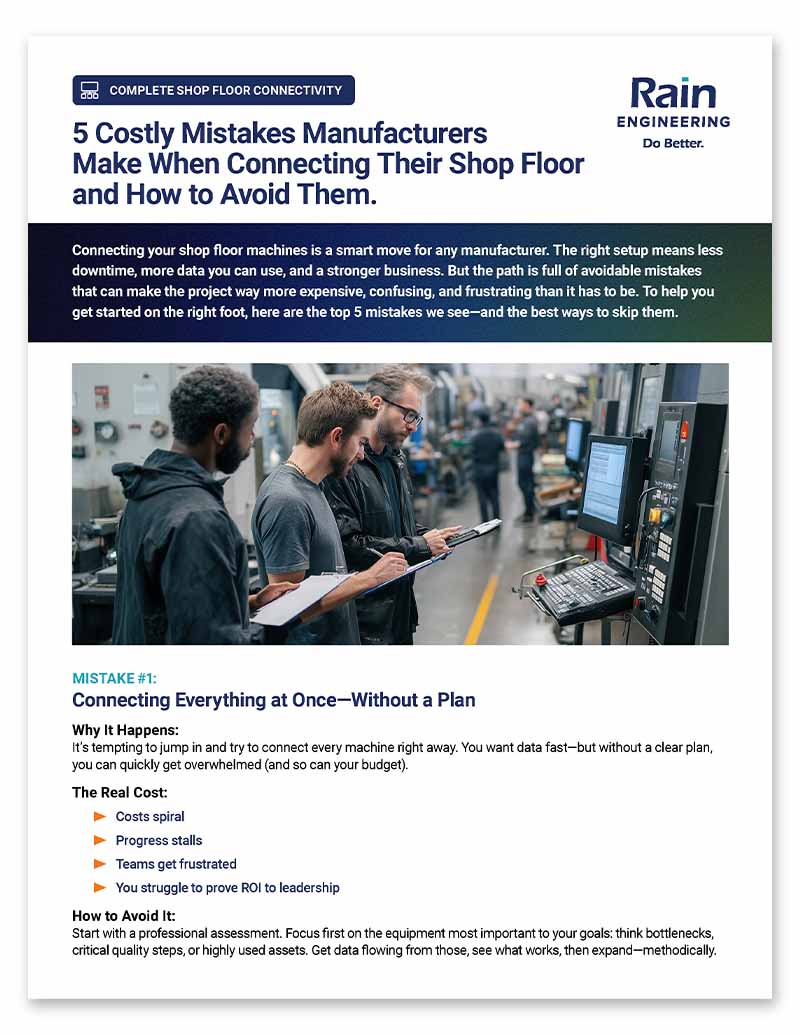
Connecting your shop floor machines is a smart move for any manufacturer. The right setup means less that can make the project way more expensive, confusing, and frustrating than it has to be. To help you get started on the right foot, here are the top 5 mistakes we see—and the best ways to skip them.
Who This Shop Floor Connectivity Guide Is For
This guide is for manufacturers who are planning to connect their shop floor machines or expand an existing connectivity project and want to avoid wasted time, money, and frustration. It’s especially helpful for teams responsible for production, quality, or operations who need better data from critical assets but want a clear, practical path instead of trial-and-error.
What You’ll Learn in the 5 Mistakes Guide
In this guide, you’ll see the five most common mistakes manufacturers make when connecting their shop floor, from trying to connect everything at once to skipping support and documentation. You’ll learn how to plan your rollout, include legacy equipment, filter the right data, choose open, flexible technology, and set up documentation and support so your connectivity project delivers results the first time.
Frequently Asked Questions
What mistakes do manufacturers make when connecting their shop floor?
Many manufacturers try to connect every machine at once without a clear plan, which overwhelms budgets, teams, and systems. Others ignore older legacy equipment, overload IT with unfiltered data, lock into proprietary technology, or skip support and documentation, making future changes and troubleshooting costly and frustrating.
How can we avoid costly shop floor connectivity mistakes?
You can avoid costly mistakes by starting with a professional assessment and focusing first on the equipment most critical to your goals, such as bottlenecks, key quality steps, or highly used assets. From there, connect methodically, include legacy machines where they add business value, and insist on open, well-documented technology so upgrades and support stay manageable.
What are some tips for connecting shop floor machines?
Begin with a clear plan tied to business outcomes like quality, uptime, or throughput, instead of trying to wire up everything “just for data.” Work with your internal tech team or a partner to identify the vital few data points for each machine, bring older equipment online with the right adapters or protocol converters, and make sure every connection and address is documented for future support.
What is the best way to connect shop floor machines to systems?
The best approach is to build a scalable, open, and well-supported connectivity layer rather than a quick, closed fix. Use open standards such as widely adopted industrial connectivity protocols, document every connection and data point, and ensure you have access to ongoing remote and onsite support so you can expand, troubleshoot, and upgrade without wasting time or money.
Have a question? Reach out to us at (833) 972-4626 or cs@raineng.com.