



About This Article:
- MES doesn’t look the same in every plant — discrete, process, and hybrid manufacturers face unique operational challenges and data structures.
- The right Manufacturing Execution System (MES) implementation hinges on how materials move, how variability is managed, and how people interact with machines.
- When MES is properly designed by industry, plants see real throughput, quality, and traceability gains — not just another layer of shelfware.
- MES connects equipment, systems, and people in ways ERP alone can’t, closing the gap between planning and production.
Manufacturing is not one thing…
A high-speed bottling line, a car assembly plant, and a chemical blending facility may all fall under the same broad category, but their production realities could not be more different.
Each one has its own flow of materials, its own constraints, and its own regulatory pressures.
Yet all of them share a common need… They must turn inputs into saleable outputs as efficiently and predictably as possible, while proving what happened at every critical step.
That is the space where a Manufacturing Execution System, or MES, earns its keep.
When designed for the industry it serves, MES looks different in each plant.
However, the outcome is the same.
Better visibility, tighter control, and performance that shows up in the numbers.
Today, we’re unpacking how MES really behaves on the plant floor in different industries, and why that difference matters if you want real gains in throughput, quality, and traceability.
Discrete Manufacturing: Precision And Traceability at Scale
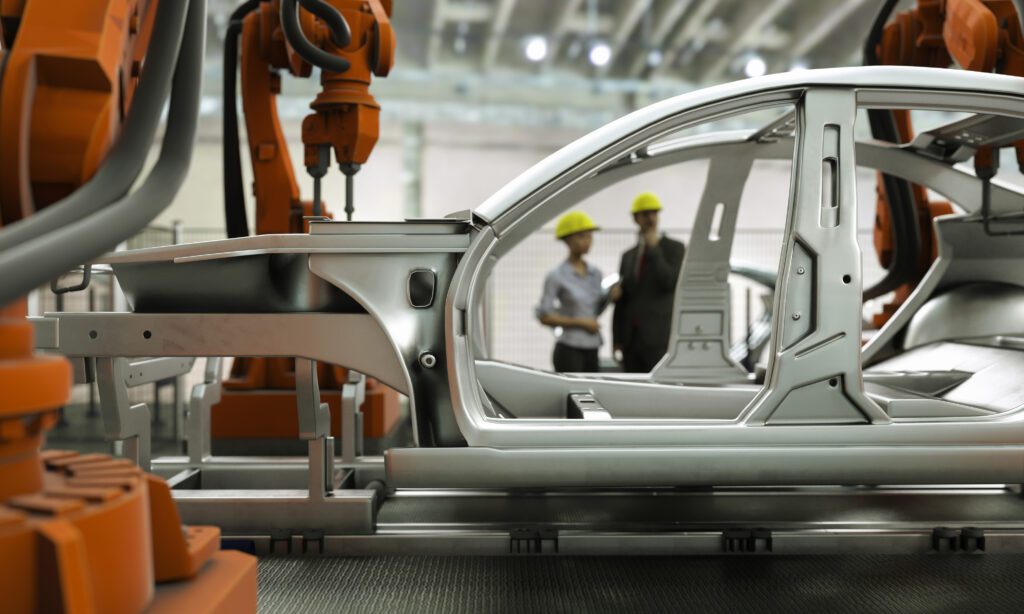
Discrete manufacturing covers environments where you build distinct units.
Automotive, aerospace, industrial equipment, and electronics are common examples.
Here, every part, assembly, and finished unit has its own identity.
MES in discrete plants behaves like a control tower that keeps all of those identities and operations synchronized.
In an automotive plant, for instance, an MES ties each vehicle identification number to a long sequence of operations, from body shop to paint to final assembly.
Work instructions at each station are driven from the system, not from binders or memory.
Operators confirm torque values, component selection, and inspection results against that digital record in real time.
If a robot faults, a part is suspected, or an operator flags a quality concern, the MES records those events against the specific unit or build order.
This creates a digital thread from raw material through final inspection that a spreadsheet or disconnected quality database cannot match.
Without MES, the plant is left with delayed, manual data entry and partial traceability that breaks down the moment a recall, warranty issue, or customer complaint arrives.
In high mix discrete environments, such as contract manufacturing or specialty machinery, MES also helps manage constant changeover and variation.
The system can present the right routing, tools, and inspection plan for each job, even when the product mix on the floor changes multiple times a shift.
That combination of unit level control and flexibility is extremely difficult to achieve with ERP alone.
Process Manufacturing: Managing Flow, Formulation, And Compliance
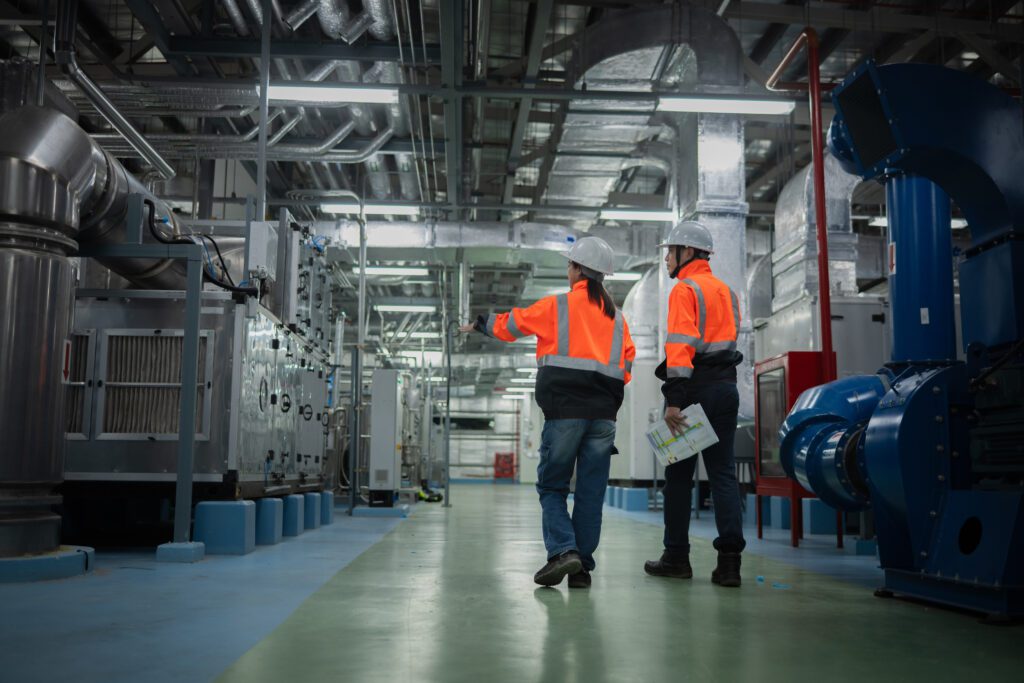
Process manufacturing looks very different.
Instead of assembling components, you are transforming materials, often through chemical, thermal, or biological processes.
Food and beverage, chemicals, paints, and pharmaceuticals are classic examples.
In these environments, the MES has to do more than track orders.
It must help enforce recipes, monitor critical parameters, and maintain clean batch and lot history for regulatory and customer requirements.
Consider a dairy producer that runs multiple production lines for different products.
Milk from different farms arrives with varying characteristics, but the final yogurt or cheese must meet very specific consistency, safety, and labeling standards.
MES supports automated batch execution by coordinating recipe steps, ingredient additions, and temperature or pressure profiles.
It captures readings from plant sensors and control systems in real time and compares them to allowed ranges.
When a deviation occurs, the system can alert operators, hold product, and log the event for later analysis.
In a chemical plant, MES plays a similar role but with additional emphasis on safety and compliance.
Recipes may involve hazardous materials, exothermic reactions, or strict environmental controls.
The MES manages the sequence of operations, records actual vs planned values, and links every batch to the raw material lots that went into it.
This batch genealogy becomes crucial if a supplier issue appears or if a regulator requests detailed production histories.
In these process environments, a traditional transactional system is simply not fast or granular enough.
MES fills that gap by interacting directly with the process itself.
Hybrid Manufacturing: The Best and Hardest of Both Worlds
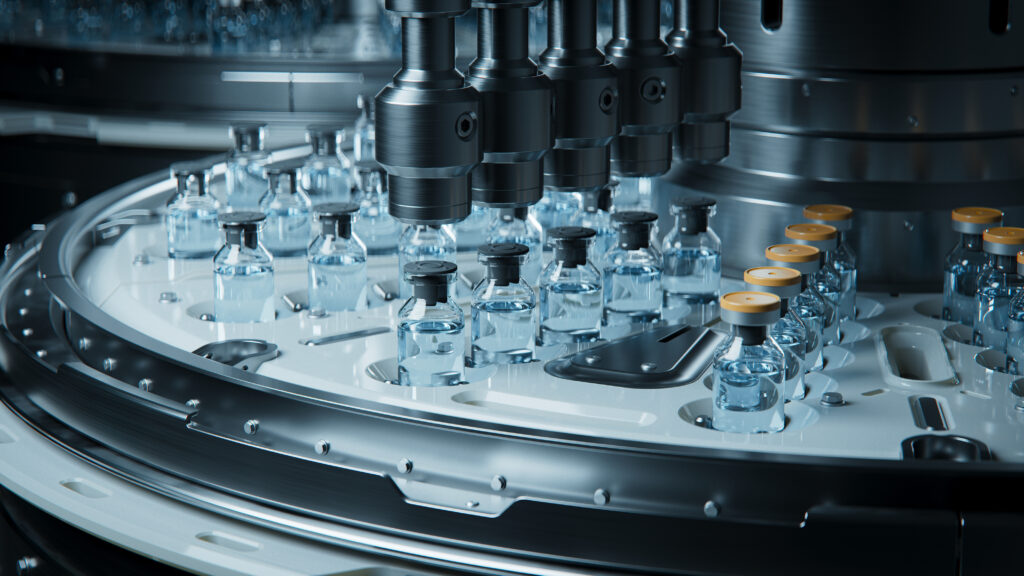
Hybrid manufacturing sits at the intersection of discrete and process operations.
Common examples include consumer packaged goods, pharmaceuticals, and some specialty chemicals or personal care products.
These plants often perform process steps upstream, such as mixing, blending, or reacting, and then transfer that product into discrete packaging operations downstream.
As a result, their MES requirements combine elements of both worlds.
Take a plant that produces shampoo.
The upstream side involves precise formulation, mixing, and quality testing.
The downstream side involves filling bottles, applying caps and labels, assembling multipacks, and palletizing.
MES in this environment must maintain batch level traceability for the formulation while also managing line performance, changeovers, and sometimes even unit level serialization for specific markets.
This dual requirement can create challenges.
Data models and workflows must bridge batch and unit perspectives without confusing operators or engineers.
When configured well, the MES allows teams to answer questions such as which batch went into which production run, which cases went to which customer, and where the chronic downtime is actually occurring across both processing and packaging.
When configured poorly, the system becomes a source of frustration that forces people back to manual workarounds.
Hybrid manufacturers benefit heavily from an MES design that respects both process and discrete realities instead of favoring one and bolting the other on later.
Beyond Shelfware: Making MES Real on the Floor

Across all of these industry types, one of the largest risks is investing in MES that never really lands on the plant floor.
This happens when software is implemented as a generic template, with limited reference to how work actually flows.
The result is a system that may technically function but does not match the shop floor language, operator roles, or existing constraints.
People then avoid it, or use it only enough to satisfy reporting requirements, and the rest of the investment quietly becomes shelfware.
Avoiding that outcome starts with the recognition that MES is as much about operations as it is about technology.
A tier two automotive supplier will prioritize tight station control, error proofing, and unit genealogy.
A food producer will emphasize recipe enforcement, allergen management, and lot traceability.
A pulp and paper mill will focus on grade changes, reel tracking, and line performance across wide web processes.
Those priorities need to be reflected in screen design, workflows, and integrations from day one.
When MES is aligned in this way, it starts to feel like part of the plant’s muscle memory rather than a separate application.
Operators see value because the system helps them do their jobs more consistently and with fewer surprises.
Engineers and supervisors gain real time visibility into bottlenecks and deviations.
Leadership sees improvements in OEE, scrap, and on time delivery.
That is the point where MES stops being an abstract project and becomes a core part of day-to-day operations.
FAQ:
Q: We know we need MES, but we’re not sure where to start. What’s the first step?
A: Begin by clearly identifying whether your plant is primarily discrete, process, or hybrid — and where the biggest pain shows up today: schedule adherence, quality escapes, traceability gaps, or constant firefighting on the line. That classification drives which MES capabilities you prioritize first, from detailed work-instruction enforcement in discrete environments to batch and recipe management in process industries.
Q: How is this different from what our ERP already does?
A: ERP plans and accounts for production; MES executes it in real time on the plant floor. MES connects to machines, operators, and quality checks, so you can see what’s actually happening at each line, cell, and batch instead of waiting for end-of-shift or next-day reports.
Q: What does “industry-specific MES” really change for my team?
A: In automotive and other discrete environments, operators see digital work instructions, torque and component verification, and unit-level genealogy tied to each serial number. In food, chemicals, CPG, and pulp & paper, your operators and engineers get recipe/batch enforcement, in-process parameter tracking, and end-to-end lot or roll traceability that stand up to audits and customer demands.
Q: How soon should we expect to see measurable results on throughput and quality?
A: Plants that deploy MES with a focused scope — one value stream, one line, or one product family at a time — typically see clearer visibility and fewer unplanned stops within months, not years. As you expand coverage, those early gains compound into higher OEE, more predictable changeovers, and faster root-cause analysis on quality issues.
Q: What should we look for in a partner to avoid MES “shelfware”?
A: Look for a team that understands your specific industry and can show real references in automotive, food & beverage, CPG, chemicals, or pulp & paper — not just generic software certifications. You want an implementation that starts with your actual workflows, constraints, and KPIs, then configures MES around that reality instead of forcing you into a one-size-fits-all model.
P.S. At Rain Engineering, we specialize in helping mid-market manufacturers implement MES solutions that actually work — designed for your specific industry, not a template.
Whether you’re in automotive, food, or consumer goods, our team connects digital systems with plant-floor reality so your technology investment pays off in measurable throughput and traceability.
If you’re exploring MES or want a second opinion on an upcoming project, connect with Rain Engineering today and let’s map out what “industry-specific MES” should really look like in your plant.
