



Article Summary:
- A July 2026 Cyclospora outbreak linked by the CDC and FDA to shredded iceberg lettuce served at Taco Bell spread across Indiana, Kentucky, Michigan, Ohio, and West Virginia, with 1,644 reported illnesses and 94 hospitalizations at the time of the CDC update.
- The FDA said traceback data identified a single supplier of shredded iceberg lettuce from Mexico used by the affected Taco Bell locations, showing how critical supplier genealogy is during a food safety event.
- Taco Bell said it removed the affected lettuce from its restaurants and then removed that ingredient from its supply chain nationwide, illustrating how quickly response decisions must happen once risk is confirmed.
- For manufacturers, food processors, and distributors, the lesson is not just about lettuce. It is about whether your systems can identify, isolate, and prove the path of a lot before the problem gets bigger.
- Rain Engineering’s value in this conversation is traceability, visibility, and control across production and material movement, the same disciplines that help companies respond faster and with less exposure.
When a food safety event becomes public, the first question is usually what happened.
The second question is where it came from… And the third, and often most expensive, question is how far it spread before anyone could stop it.
That is why the recent lettuce-linked Cyclospora outbreak deserves attention not only from consumers, but from every company that handles ingredients, packaging, or finished goods in a complex supply chain.
What happened in this case is not just another headline about contaminated produce… It’s a clear example of how fragile supply chain visibility can become when an ingredient passes through multiple hands before it reaches the customer.
For manufacturers and processors, it is a reminder that traceability is no longer a compliance checkbox… It’s an operational capability that can protect revenue, reputation, and customer trust when the unexpected happens.
Today we take a closer look at the recent lettuce-linked Cyclospora outbreak and why when an ingredient passes through growers, processors, distributors, and restaurant systems, the only way to respond with precision is through strong traceability.
What Happened
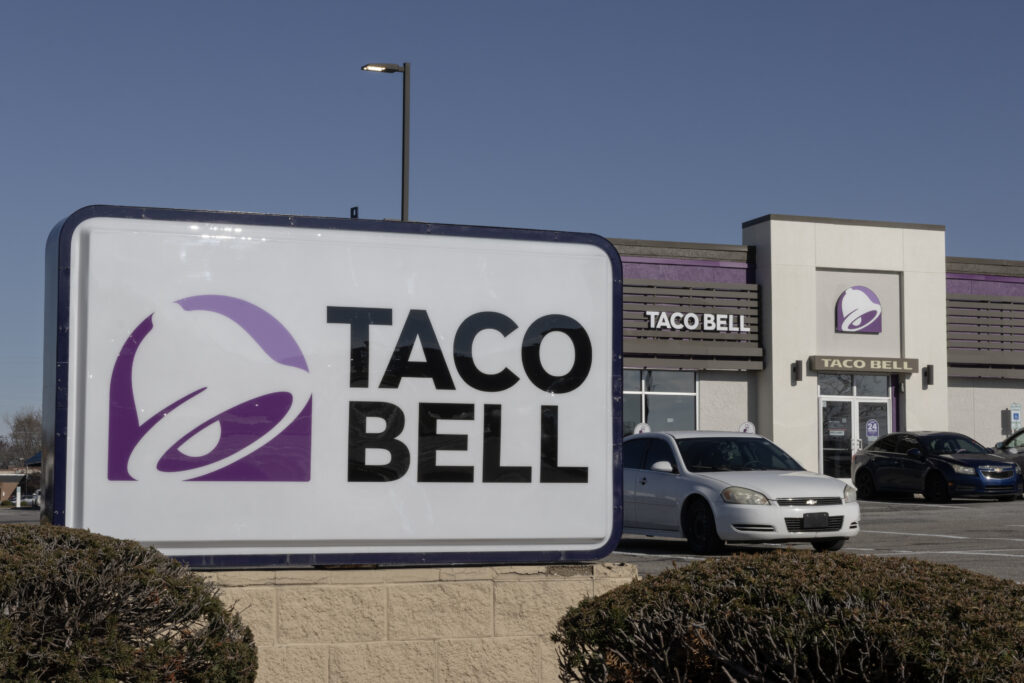
The CDC said it was investigating a multistate Cyclospora outbreak linked to shredded iceberg lettuce served at Taco Bell locations in five states: Indiana, Kentucky, Michigan, Ohio, and West Virginia.
In its July 17 update, CDC reported 1,644 people infected with Cyclospora and reporting exposure to Taco Bell, with illnesses beginning between May 13 and July 13. The agency also reported 94 hospitalizations and no deaths.
The FDA said traceback investigation identified a single supplier of shredded iceberg lettuce from Mexico used by the Taco Bell locations where ill people had eaten. That detail matters because it shows the outbreak response was not built on guesswork alone. It was built on epidemiology, lot tracing, and supplier investigation, which are exactly the kinds of controls that become decisive when a safety event spans states, brands, and distribution channels.
According to their official statement, Taco Bell said it took immediate action to voluntarily remove potentially impacted lettuce from a supplier in select states and then removed the affected ingredient from its supply chain nationwide.
That response likely helped limit additional exposure, but it also highlighted how difficult it is to move quickly when the source chain is not fully visible from end to end.
Why Lettuce is Hard to Trace
Fresh produce creates traceability problems that are more complicated than those in many dry-goods or packaged-goods environments.
Lettuce is often harvested, trimmed, washed, shredded, bagged, blended, and shipped through multiple facilities before it ever reaches a restaurant or retail shelf. If one input lot is cross-merged with another lot, the source chain becomes harder to unwind once a problem appears.
That complexity is one reason outbreaks like Cyclospora can frustrate investigators and operators alike.
CDC noted that this outbreak was tied to a food item served in multiple states, and the FDA was still tracing the supply chain as the investigation evolved.
The more handoffs there are, the more opportunity there is for documentation gaps, delayed reporting, or inconsistent record formats. A system can only trace what it has actually captured.
Reported by the New York Times, Michigan health officials also said lettuce or salad greens were a possible source in an earlier phase of the investigation, which shows how fast early findings can shift as more data comes in.
That uncertainty is normal in outbreak work, but it creates a difficult operating environment for food companies.
Until the source is pinned down, brands may be forced to pull inventory broadly, which increases cost and disrupts operations even when not every item is contaminated.
What Traceability Actually Does
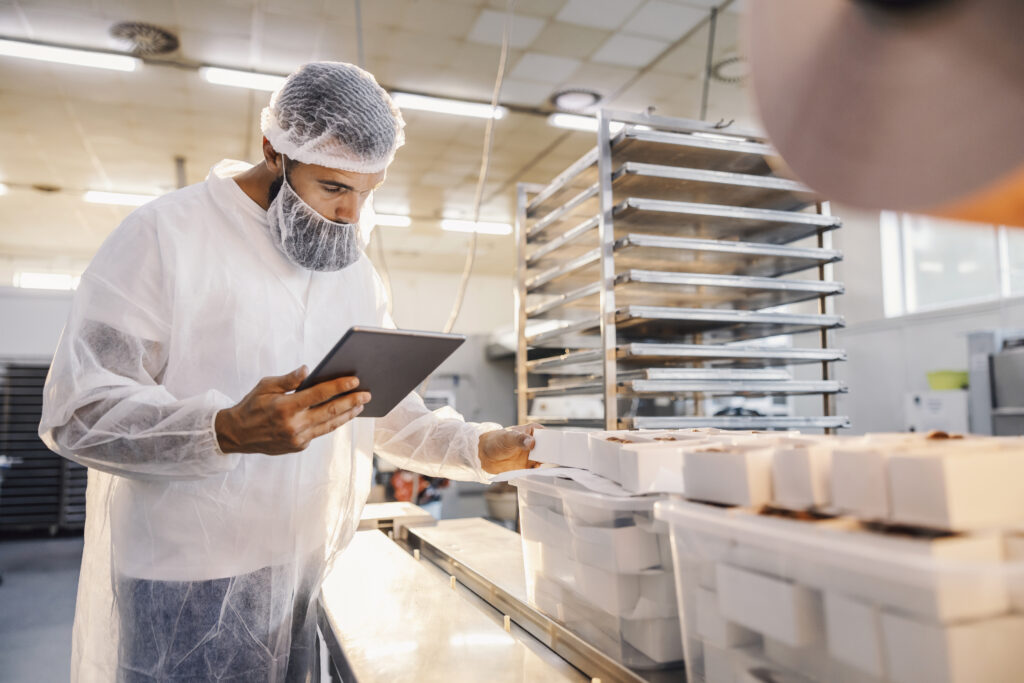
Traceability is not just a database or a label scanner… It is the ability to reconstruct the life of a product lot from raw input to final shipment.
In practice, that means knowing which supplier sent the material, which line ran it, which shift handled it, what time it was processed, which downstream orders received it, and whether any other lots were blended into the same stream.
That level of detail turns a vague problem into a manageable one.
If a company can identify the exact affected lots, it can target a recall instead of shutting down an entire product family.
If it can identify every customer who received those lots, it can communicate directly instead of sending out broad warnings.
If it can connect incoming materials to finished goods in real time, it can stop a problem before the same issue repeats across multiple production runs.
In the Taco Bell case, the value of traceback was obvious because the investigation narrowed the issue to a single supplier of shredded iceberg lettuce from Mexico.
Without that kind of linkage, the response would have stayed much broader for much longer.
That broader response means more waste, more labor, more lost sales, and more brand damage.
The Business Risk of Slow Visibility
Food safety incidents are often discussed as public health events, but the business impact is just as important.
When a brand cannot confidently answer where affected product went, it may have to pull more inventory than necessary, pause purchasing, or suspend menu items while it sorts through the facts.
That is what makes traceability a business resilience issue, not only a safety issue.
The recent outbreak shows how quickly a supplier-level problem can affect a restaurant chain’s public messaging.
Taco Bell had to explain to customers that it had removed potentially impacted lettuce from select states and then from its supply chain nationwide.
That kind of action can be the right move, but it also shows the operational cost of uncertainty.
A company that can isolate the issue sooner can usually act with more precision and less disruption.
There is also reputational risk as customers rarely distinguish between a grower, processor, distributor, and restaurant when they hear about an outbreak…
They remember the brand name that was visible when they got sick or when they saw the warning.
That means traceability protects not just the supply chain, but the brand layer on top of it.
Why This Matters Beyond Food

Even though this outbreak involves produce and food service, the underlying lesson is much broader.
Any manufacturing environment that depends on raw materials, inbound suppliers, and downstream shipment visibility faces the same structural risk.
If your records are fragmented, your response will be fragmented too.
That is why manufacturing execution systems matter.
MES platforms are designed to connect production events, material movement, quality checks, and genealogy records into one operational picture.
When implemented well, they help teams answer questions like which lot was used, where it went, and what else was in the same process path.
That ability is useful in food, packaging, chemicals, discrete manufacturing, and any regulated or high-volume environment where traceability matters.
The same logic applies to supplier quality management and audit readiness.
If a company can quickly prove what happened, it can reduce the time spent searching for answers and increase the time spent solving the actual problem.
It can also show regulators and customers that it has control over its process instead of reacting after the fact.
In an era of tight margins and constant scrutiny, that control is a competitive advantage.
Where Rain Engineering Fits
This is the point where Rain Engineering’s role becomes especially relevant.
If traceability is the goal, then the company needs a system that captures production data cleanly, links lots correctly, and makes genealogy easy to retrieve when an issue surfaces. That is the practical value of MES support and connected manufacturing software.
Rain Engineering helps companies move from paper trails and disconnected spreadsheets to structured process visibility.
In an outbreak scenario, that kind of visibility can help teams determine which lots were affected, which customers received them, and which shipments are safe to leave alone. That means faster containment, fewer unnecessary losses, and stronger confidence in the response.
It also helps before an incident occurs…
Good traceability systems support better inventory control, better quality assurance, and better process consistency every day, not just during a crisis.
When organizations treat traceability as part of normal operations, they are better prepared when regulators, customers, or internal quality teams need answers fast.
That is the difference between being reactive and being ready.
The Broader Food Safety Lesson
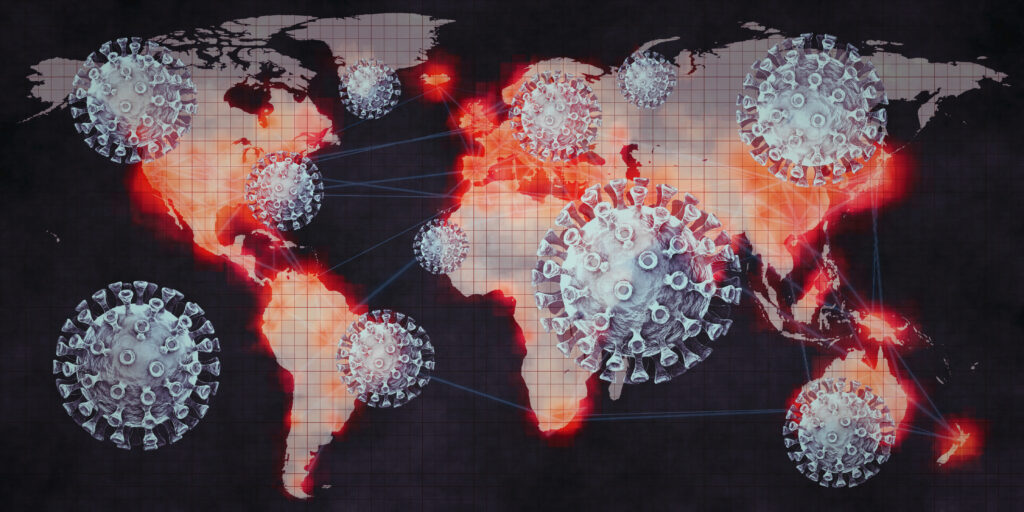
The outbreak also shows why food safety incidents rarely stay local anymore.
Once an ingredient is distributed across several states, the public health challenge becomes regional or national almost immediately.
That means companies need systems that are built for scale, not just for internal convenience.
It is worth noting that the outbreak was still under active investigation while new details continued to emerge, including the source identification and related public warnings.
That is normal for a fast-moving investigation, but it reinforces a key point: the companies with the cleanest data usually have the best shot at a fast, accurate response.
The companies with weak records spend more time debating what happened than containing what is happening.
This is also why “good enough” traceability is not actually good enough.
A system that works in calm conditions but breaks under pressure is not a strong system.
The real test comes when the first call from a regulator, buyer, or customer arrives and the clock starts running.
The Wrap Up
The recent lettuce outbreak is a reminder that supply chains are only as strong as the records behind them.
In this case, investigators were able to connect illnesses to shredded iceberg lettuce served at Taco Bell locations and trace the issue back to a single supplier.
That is a major step, but it also shows how much effort is required to get to that answer.
For manufacturers, processors, and distributors, the lesson is straightforward: Traceability is not an optional layer added after quality work is done… It is part of quality itself.
Companies that can see their materials clearly can respond more accurately, protect customers more effectively, and limit the fallout when something goes wrong.
The companies that invest in traceability before a crisis are the ones that are least likely to be blindsided by one.
… And in a supply chain world that moves this fast, that kind of preparedness is worth a great deal.
FAQ
Q: What caused the recent lettuce outbreak?
A: CDC linked the July 2026 outbreak to shredded iceberg lettuce served at Taco Bell locations in five states.
Q: How many people were affected?
A: CDC reported 1,644 infected people reporting exposure to Taco Bell, with 94 hospitalizations and no deaths at the time of the update.
Q: Why is traceability so important?
A: It helps companies identify affected lots, limit recall scope, and reduce unnecessary exposure.
Q: How does Rain Engineering help?
A: Rain Engineering supports manufacturing visibility and traceability through connected production data and MES-focused process control to help companies like yours “DO BETTER”.
P.S. If your operation cannot trace a product from supplier to shipment quickly, it is already operating with unnecessary risk.
Rain Engineering helps manufacturers like you build the visibility needed to respond faster, contain issues sooner, and protect both customers and brand reputation.
You can’t afford to let a mistake of this magnitude happen to your business…
Let’s work together to make sure it doesn’t!
