


Is Industry 4.0 Still Relevant?

Take a stroll through a modern factory and you’ll feel it: the unmistakable hum of machines, the flicker of sensor lights, the subtle chatter of data moving through networks.
The last decade saw “Industry 4.0” become the catch-all for this technological buzz—an elegant shorthand for the revolution that blended robotics, smart machines, connected systems, and big data into the fabric of manufacturing.
… But as technology evolves at breakneck speed, new questions are on the table.
Is Industry 4.0 still at the heart of it all, or has manufacturing already outpaced its own digital revolution?
Today, let’s unpack what’s actually happening on the ground and where things might be heading in the near future.
The Rise of Industry 4.0
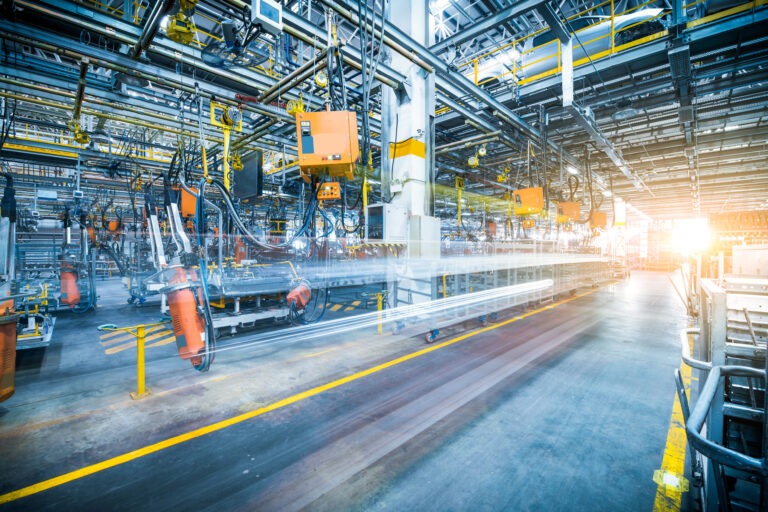
Not so long ago, the idea of a “smart factory” seemed distant—almost sci-fi.
Networks of IoT sensors, machines alerting humans before they broke, robots rolling parts across the floor, tailored supply chains shifting in real time: these were the hallmarks of Industry 4.0.
It promised a manufacturing world deeply mapped and meticulously connected.
With this came real, measurable change.
Data was suddenly available at every turn, from maintenance schedules to inventory levels.
Factories became more adaptive and efficient.
The result? Many organizations slashed their downtime, optimized their supply chains, and stayed competitive even as markets whiplashed.
Yet, the story doesn’t stop with connectivity.
Today’s manufacturing landscape is crowded with even more futuristic-sounding arrivals.
Artificial intelligence doesn’t just collect and process data—it finds new ways to streamline production, catch defects, or even design products.
Edge computing pushes decision-making right onto the factory floor instead of distant data centers, making instant reactions possible.
3D printing offers customization and speed once thought impossible, while advanced robotics can now collaborate safely with humans rather than working in fenced-in isolation.
It’s not just hype… These innovations are reshaping what’s possible, introducing tools that act and adapt in ways we couldn’t forecast even a handful of years ago.
Does that mean Industry 4.0 is getting old?
Is it destined to be remembered as a stepping stone—useful for a few years, paved over by whatever comes next?
Or is it something bigger: a foundational shift that lets these new breakthroughs flourish, interlink, and build upon one another?
Some argue we’re on the cusp of “Industry 5.0”—a new wave focused on human-centricity, sustainability, and resilience.
There’s plenty of excitement around how the newest technologies will change the factory again (and again).
Maybe the term “Industry 4.0” itself is starting to feel a bit dated.
Yet, when you talk to plant managers, technology leads, or the folks who keep the shop floors running, you find something interesting.
The most ambitious innovations—AI-driven preventive maintenance, hyper-flexible supply chains, zero-waste production—don’t just appear out of nowhere.
They flourish where robust digital and connected systems already exist.
In fact, the newest tech almost always builds on the bones of the Industry 4.0 transformation: it needs those sensors, that data integration, and the seamless communication between machines and people.
It’s like architecture.
Picture a house packed with all the latest gadgets: self-darkening windows, security systems you control by voice, wiring for every possible convenience.
But would you trust all that to a foundation made for a small brick cottage?
The more you want to achieve, the more critical your underlying structure becomes.
Pile on the complexity and the foundation—good or bad—determines what will stand the test of time.
For manufacturers, the question isn’t just what tech can do—it’s how well it all fits together.
Innovation is no longer about swapping a single machine or app, but about orchestrating entire digital ecosystems.
Factories need to be agile, resilient, and sustainable.
Achieving this means integrating new tools without fracturing the whole operation or sacrificing stability.
If your factory isn’t digital at its roots, layering on AI or 3D printing often causes more headaches than it cures.
On the other hand, the places with solid connectivity, reliable data, and a culture of digital transformation find new tools integrate faster, deliver real gains, and allow for growth without constant reinvention.
This is all part of the manufacturing world we are living in and is certainly going to be part of our future.
So, is Industry 4.0 still relevant?
The facts tell a rich story: manufacturing has never moved so fast, and new possibilities arrive daily.
But for those on the shop floor, in the IT department, or managing operations from afar, one thing remains unchanged.
The dream of agile, sustainable, endlessly customizable production rests on more than the latest robot, algorithm, or gadget.
Does Industry 4.0 still matter? Has it outlived its usefulness—or is it still the unshakable foundation beneath everything else?
Here’s the answer: as manufacturing’s tools and methods accelerate and evolve, the core digital infrastructure and principles of Industry 4.0 remain absolutely essential.
They’re not old news—they’re the very ground supporting tomorrow’s breakthroughs.
In other words, in your house, you can change the walls, the roof, and add all the smart features you like, but a strong, modern foundation is what keeps the whole structure standing firm.
Industry 4.0 is—and will remain—the necessary platform on which the future of manufacturing will be built.
P.S. If this article resonated with you and you’re wondering how to turn the principles of Industry 4.0 into practical, lasting results, that’s where Rain Engineering comes in.
At Rain Engineering, we help manufacturers of all sizes lay the digital groundwork for Industry 4.0 success—and then build further with integrated, forward-thinking solutions.
Whether you need to modernize legacy systems, connect your machinery, streamline data flows, or introduce next-generation automation, our expert team partners with you from blueprint to finished factory floor.
How Rain Engineering Can Support Your Next Step:
- End-to-end Industry 4.0 assessments and roadmaps
- Seamless integration of IoT, data analytics, and smart automation
- Customized solutions for unique manufacturing challenges
- Ongoing support to keep your operations agile and future-ready
Your factory’s future deserves a strong foundation…
