



ARTICLE SUMMARY:
- Explains how MES behaves differently in discrete, process, and hybrid plants while solving the same core problems.
- Connects MES capabilities to real world outcomes like throughput, first pass yield, and traceability across automotive, food, CPG, chemicals, and pulp & paper.
- Helps operations leaders turn “we need MES” into a grounded, industry specific roadmap instead of another underused system.
Manufacturing leaders talk about “implementing MES” as if manufacturing were a single, monolithic thing, but anyone who has walked both an automotive assembly line and a liquid blending room knows they are worlds apart.
The point of a modern Manufacturing Execution System is always the same: connect equipment, systems, and people so you get measurable gains in throughput, quality, and traceability, but how that actually shows up on the plant floor is radically different in discrete, process, and hybrid industries.
In this article, we will unpack how MES really works where work is done, from auto to food, CPG, chemicals, and pulp & paper, and why the nuances matter if you want results instead of shelfware.
Manufacturing Is Not One Thing
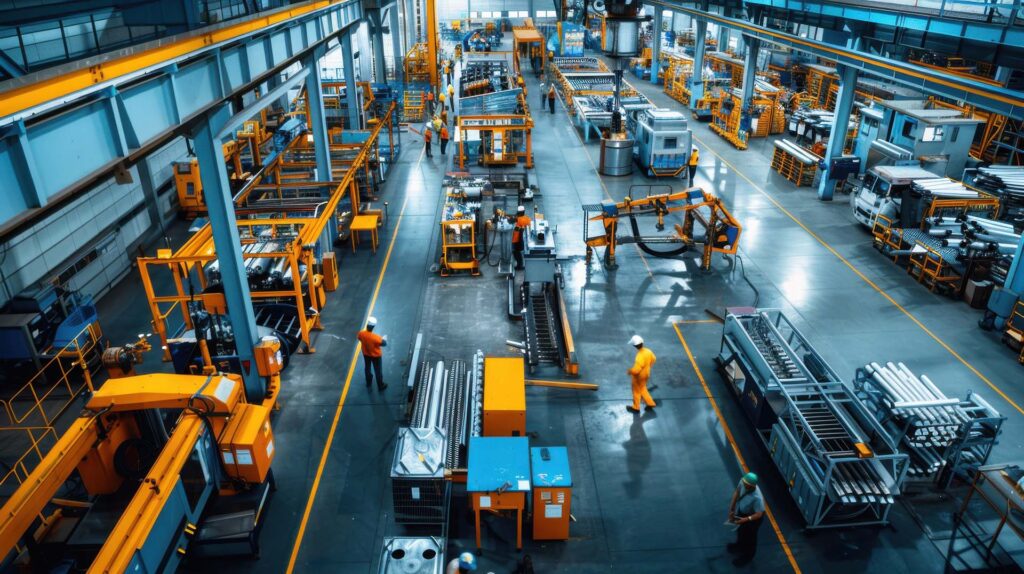
When you say “manufacturing” to an ERP vendor, they often picture a generic routing and a bill of material, but on the plant floor there are at least three fundamentally different worlds: discrete, process, and hybrid.
Discrete manufacturers build countable, serialized units, for example vehicles, industrial equipment, and electronics, using structured routings, multi-level BOMs, and highly orchestrated assembly or machining steps.
Process manufacturers, by contrast, are executing recipes and formulations for fluids, powders, and gels where materials undergo irreversible chemical or thermal changes, often in batch or continuous modes that live and die by strict formula management and in process testing.
Hybrid environments blend both worlds…
A food or CPG plant might mix liquid or powder in process vessels, then fill, package, and case discrete units on high-speed lines, or a chemicals operation might drum and pallet finished product with discrete identifiers.
These structural differences drive what “good MES” actually looks like.
In discrete, MES lives and dies on tight routing enforcement, serialized traceability, and changeover discipline at the workcell level.
In process, it is all about recipe execution, batch genealogy, and integration to lab and quality systems.
In hybrid, you are orchestrating both the batch and the packaging hall while keeping material movements and labels in sync.
If you roll out a one size fits all template that was built for an auto assembly line into a dairy plant or an adhesives operation, you are almost guaranteed to end up with frustrated operators and a system that quietly falls out of use.
How MES Behaves in Discrete Plants
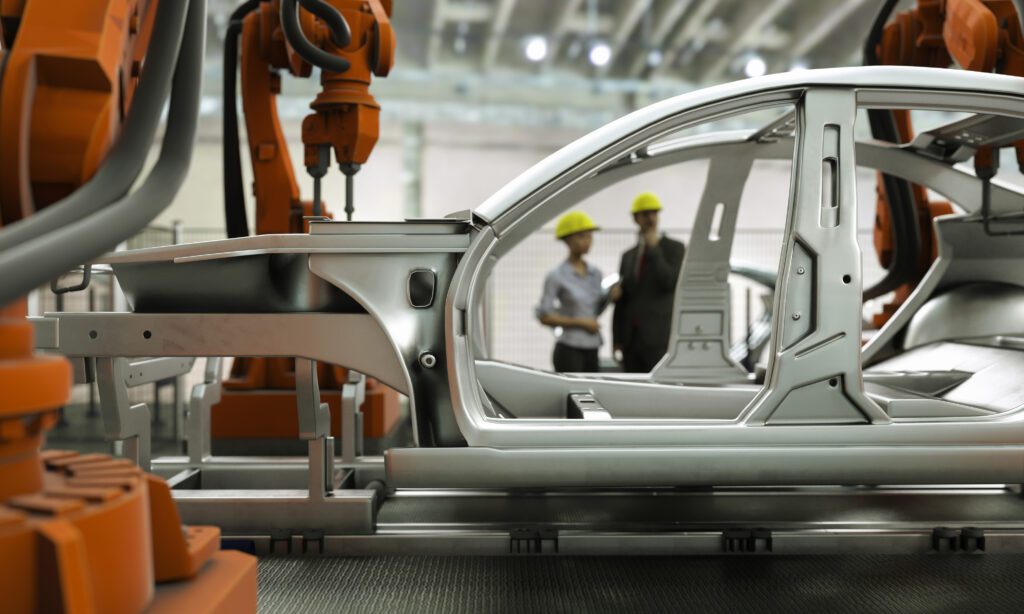
In discrete industries like automotive, aerospace, or industrial equipment, MES sits between ERP and the line as the system of record for work in process.
ERP releases production orders, but it is MES that explodes them into operations, routes units or containers to stations, collects data from PLCs and tooling, and enforces sequence and torque, vision, or test checks at each step.
A well-known example comes from automotive assembly, where MES is used to track each vehicle’s VIN through body, paint, and final assembly while capturing component serial numbers, operator IDs, and test results at each workstation so that full genealogy exists for every car that leaves the plant.
On the floor, operators experience MES through station terminals, andons, or HMIs that show them exactly what to do next and prevent them from skipping critical steps.
For an automotive OEM or Tier 1 supplier, that might mean MES will not let a job advance until a safety critical fastener hits the right torque window, or until a camera confirms presence or position of a component, with any non-conformance generating a repair ticket rather than disappearing into a spreadsheet.
This is what translates into the KPIs leadership cares about, such as higher first pass yield, lower warranty exposure, and the ability to surgically target recall campaigns because you know exactly which VINs were built with a suspect component lot.
In mid-market discrete plants, MES often starts smaller, on a handful of bottleneck lines or workcells, but the same principles apply.
You connect PLCs and test stands to real time production tracking, surface OEE losses by asset and shift, enforce digital work instructions, and build up traceability without overwhelming the floor with data entry.
The core question is not “Do we have MES” but “Does MES actually control and document the work where defects, delays, and rework are created”.
How MES Behaves in Process and Hybrid Plants
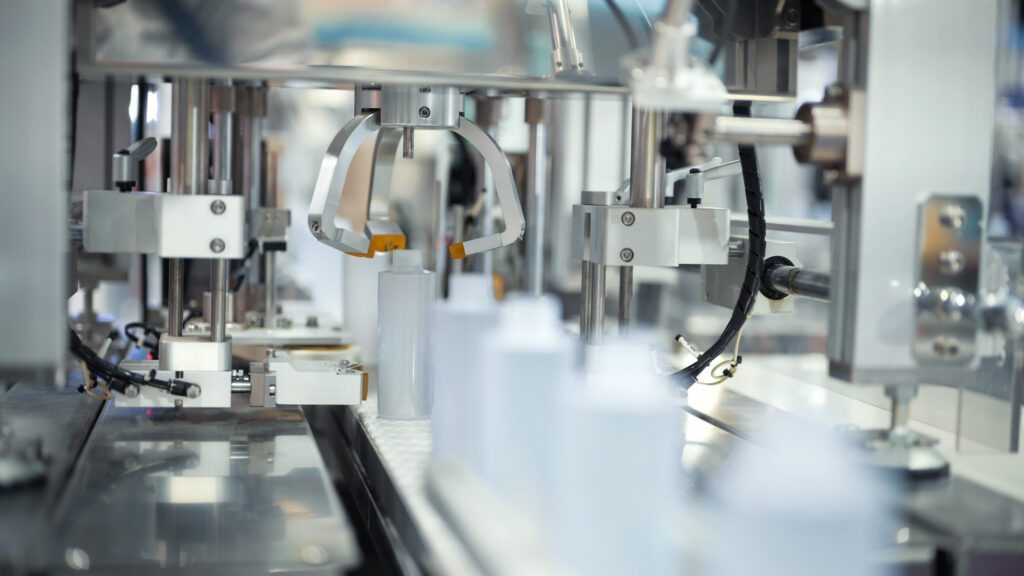
Process manufacturers in food and beverage, CPG, chemicals, or pulp & paper care deeply about formulations, batch integrity, and regulatory or customer specifications, which changes what they need from MES.
Instead of routing individual units, MES is orchestrating batches, tanks, or continuous runs.
It ensures the right materials are weighed or dosed into a mixer, manages temperature, pressure, and dwell times, and integrates to lab systems that release or hold batches based on test results.
For a food or beverage producer, MES typically holds the master recipes, supervises automated dosing or blending, and records every lot of raw material that goes into a batch so that any downstream recall can be traced back to specific supplier lots and process conditions.
Hybrid environments add another layer of complexity because the same batch may feed multiple packaging lines, formats, or SKUs, which is where MES has to bridge process and discrete logic.
In a CPG plant, a flavored beverage batch held in a tank might be filled into cans, bottles, and multi packs.
MES needs to maintain batch genealogy, track material movements, and synchronize label data and allergen or nutritional declarations across formats without losing traceability.
In chemicals or adhesives, you may be blending in kettles, then drumming or boxing product with discrete serials or pallet IDs.
Again, MES must keep the chain intact from raw material lot through blend, fill, pallet build, and shipment.
This is also where modern hybrid architectures are gaining ground.
On premises MES runs at the line, while cloud services provide analytics, cross plant benchmarking, and AI or machine learning use cases.
Process and hybrid manufacturers are using cloud connected MES data to compare OEE and waste across plants, feed predictive maintenance models, and improve supply chain visibility, while keeping latency sensitive control and operator workflows close to the equipment.
The pattern is the same across industries.
MES executes and captures what actually happens, and cloud platforms help you learn from it and scale best practices.
Why Industry Specific MES Matters for Mid-Market Plants

For mid‑market operations leaders, the real risk is not picking the wrong software logo but deploying something that was never tuned to your industry or your plant floor constraints.
A Tier 1 automotive MES template dropped into a regional snack producer will feel foreign to operators who think in terms of changeovers, sanitation windows, and giveaway, not torque graphs and VINs.
A batch‑centric recipe engine forced on a machining job shop will leave planners and supervisors fighting the system instead of using it.
The crucial distinction is that the technology itself does not have to be industry‑specific to work effectively. What matters is how it’s implemented and tuned to your operation.
Proficy, for example, was originally built to solve demanding manufacturing problems in one sector, but it was architected with a flexible core and modular design that allows it to represent nearly any form of production. That flexibility is what makes it adaptable to diverse manufacturing environments.
With the addition of the new Discrete module, Proficy now spans high‑volume automotive‑style lines, complex job shops, and batch‑oriented environments within a single, unified MES platform.
This breadth proves that the software itself doesn’t need to be pigeonholed as “industry‑specific.” Instead, it can be tuned to your sector through a combination of out‑of‑the‑box capabilities, integration, and flexible UX options (provided that you have the right partner guiding that adaptation.)
An industry‑aware MES program focuses on the right questions for each environment.
In automotive and other discrete manufacturing, you ask where serialized genealogy, station‑level error proofing, and constraint‑based scheduling will move the needle.
In food and CPG, the focus shifts to batch and lot traceability, changeover loss, and compliance.
In chemicals and pulp & paper, recipe control, grade changes, and continuous run stability become key.
The same Proficy foundation can support each of these use cases, as long as someone has modeled the right products, routes, workflows, and KPIs.
The core technology stack remains consistent across plants.
What changes is the way it’s configured and tuned to fit your vertical and even your specific sites.
That fine‑tuning doesn’t come from an industry label on the box; it comes from a skilled integration partner who understands both the software and the manufacturing realities of your industry.
This is where Rain Engineering earns its keep.
Rain Engineering brings industry‑specific integration patterns, proven deployment strategies, and deep familiarity with Proficy’s capabilities to ensure the system behaves as if it were built just for your industry, without sacrificing the flexibility that lets it evolve with your business.
For a mid‑market plant manager or engineering leader, that means you’re not choosing between a generic MES and an industry‑specific MES.
You’re choosing whether you have a partner who can take a powerful, flexible platform like Proficy and make it your own.
In practical terms, you’re not just buying software.
You’re buying a plan to connect equipment, systems, and people in a way that your teams will adopt and your CFO will see in throughput, quality, and service metrics.
In the end, MES success is less about buzzwords and more about fit…
Fit to industry, fit to plant, and fit to the way your operators actually do the work that creates value.
FAQ:
What is the difference between MES in discrete and process manufacturing?
In discrete manufacturing, MES tracks units or serial numbers through defined routing steps, captures station level data, and enforces sequence and quality checks at each operation.
In process manufacturing, MES focuses on recipes, batches, and continuous runs, controlling parameters like temperature and dwell time and linking lab results to batch release decisions.
How does MES improve traceability and recall management?
MES records the full genealogy of a product, for example component serials, lot numbers, equipment used, and operator actions, from raw material through finished goods.
When there is a quality issue or recall, you can identify exactly which batches, vehicles, rolls, or pallets are affected instead of pulling broad date ranges or entire production runs.
Do mid-market plants really need a different MES approach by industry?
Yes. An MES configuration that works well for a high‑volume automotive line will not fit a snack plant or a pulp and paper mill without significant redesign.
The crucial point is that the MES technology itself does not have to be “industry specific”; what matters is that a flexible platform such as Proficy is configured so its data models, workflows, and user interfaces reflect how your particular industry plans, runs, and measures production.
Proficy’s architecture and modules, including its Discrete capabilities, give it the range to support all major forms of production, but it only feels industry specific when it has been tuned correctly.
The real leverage comes from choosing an integration partner, like Rain Engineering, that understands both your industry patterns and your site‑specific processes, and can use Proficy’s out‑of‑the‑box capabilities and flexible UX options to make the MES behave as if it were built just for the way your lines, crews, and business actually operate.
How does MES typically connect to ERP and other systems?
MES usually sits between ERP and the shop floor, consuming orders and master data from ERP and sending back confirmations, consumption, and performance results.
It often integrates with PLCs and SCADA for real time signals, LIMS for quality results, WMS for material movements, and CMMS for maintenance triggers so that production, inventory, and quality stay aligned.
What should operations leaders prioritize first when scoping an MES project?
Most successful programs start by focusing on a few high impact objectives that provide real results and generate momentum both on the plant floor and for management.
Rather than the all-at-once method for existing sites, the long-term plans are magnified by short-term gains that increase buy-in from the team. Leaders then map those objectives to specific lines, assets, and use cases and only after that select technology and implementation partners.
P.S. If your automotive, food, CPG, chemical, or pulp & paper operation is stuck between “we know we need MES” and “we have no idea what it should look like for our world”, Rain Engineering helps mid-market manufacturers design and implement industry specific MES architectures that connect the dots from PLC to ERP, and actually move throughput, quality, and traceability, not just your software spend.
Interested in learning how Rain Engineering can help your facility?
