


Consumer Packaged Goods Manufacturing
Your customers notice one bad unit.
Your CPG line can’t afford to make it.
CPG manufacturing runs on throughput, consistency, and brand trust. A missed quality spec, a mislabeled case, or a retailer compliance failure costs far more than the product itself. Rain Engineering implements Proficy MES to give your lines real-time visibility, quality enforcement, and traceable production records before something ships that shouldn’t.

Are you experiencing these real problems on your CPG floor?
These aren’t edge cases. They’re the daily reality on CPG lines without a connected MES — and every one of them has a direct cost attached to it.
Your OEE number is a guess, not a measurement
Line 7 ran at 78% last week. The supervisor called it “microstops” – small interruptions that don’t get logged individually but add up across a shift. Without automated PLC-based downtime capture, you can’t tell if it was a sealer problem, a film splice issue, or three different causes. The data to fix it doesn’t exist, so Line 7 runs at 78% again next week.
Quality holds are discovered at the pallet, not the line
Seal integrity failures, wrong-count packages, print misregistration, weight deviations – these are caught by end-of-line inspection or, worse, by the retailer. Catching them at the source means a 10-unit correction. Catching them at the retailer means a full-load return, a compliance deduction, and a brand conversation you don’t want to have. The gap between those two outcomes is inline quality measurement tied to an MES.
Production pressure is constant because brand damage starts with one bad unit
A single visibly defective product can damage the brand in a way that far outweighs the value of the item itself.
HOW PROFICY HELPED A GLOBAL CPG MANUFACTURER STANDARDIZE AND SCALE MES
How Rain Engineering Helps CPG Manufacturers
Rain Engineering doesn’t just install software. It connects your actual equipment, configures your actual quality specs, and builds your actual workflows into Proficy so what shows up on the dashboard reflects what’s happening on the line, not what the demo slide said it would look like.

Proficy Plant Applications – Efficiency (OEE)
Real-time OEE is calculated automatically from PLC signals – no operator input required for downtime logging. Every stop event is captured, coded, and categorized. By the end of the first shift, you have a Pareto of your actual loss sources. By the end of Week 2, you have trend data you’ve never seen before.
- Real-time OEE per line and shift
- Automatic stop categorization, including microstops
- Shift and daily Pareto reporting by cause code
- Changeover tracking tied to actual start/stop
- Direct PLC connectivity through Proficy IGS and Kepware
Quality management – inline spec enforcement
Quality specs – weight, count, seal integrity, print registration, moisture, package dimensions – are loaded into Proficy Plant Applications and enforced continuously against live measurement data. Deviations trigger immediate operator alerts, before the reject pallet grows. Statistical process control charts give quality engineers a real-time view of process drift before it becomes a hold event.
Genealogy and lot traceability – retailer-ready documentation
Every raw material receipt, production run, inspection result, and finished case is linked in Proficy’s genealogy system. A retailer audit request or a lot trace takes seconds instead of days. Certificates of Analysis and related documentation can be generated from system data instead of assembled by hand during a crisis.
Scheduler and production coordination
The CPG draft also supports linking scheduling problems to Proficy Scheduler so planners can reduce unnecessary changeovers, improve schedule adherence, and make better decisions using real plant-floor conditions instead of stale spreadsheet assumptions.
Schedule a Free Assessment
30 minutes of insights.
Talk with Rain about improving OEE, traceability, and first-time quality.
Related Stories
All Customer Stories-
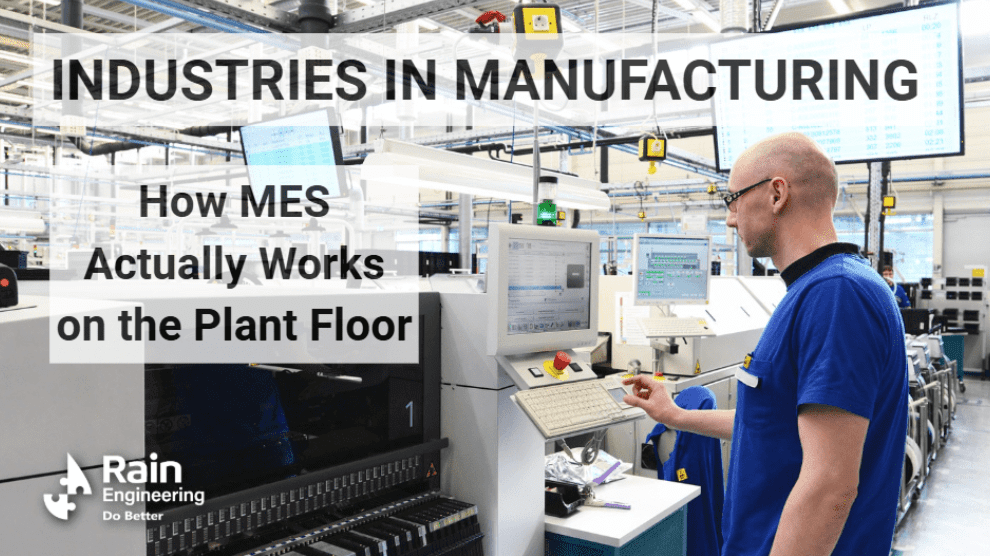
How MES Actually Works on the Plant Floor in Different Industries
One of the largest risks is investing in MES that never really lands on the plant floor. This happens when software is implemented as a generic template, with limited reference to how work actually flows. The result is a system that may technically function but does not match the shop floor language, operator roles, or existing constraints. People then avoid it, or use it only enough to satisfy reporting requirements, and the rest of the investment quietly becomes shelfware. Avoiding that outcome starts with the recognition that MES is as much about operations as it is about technology.
-
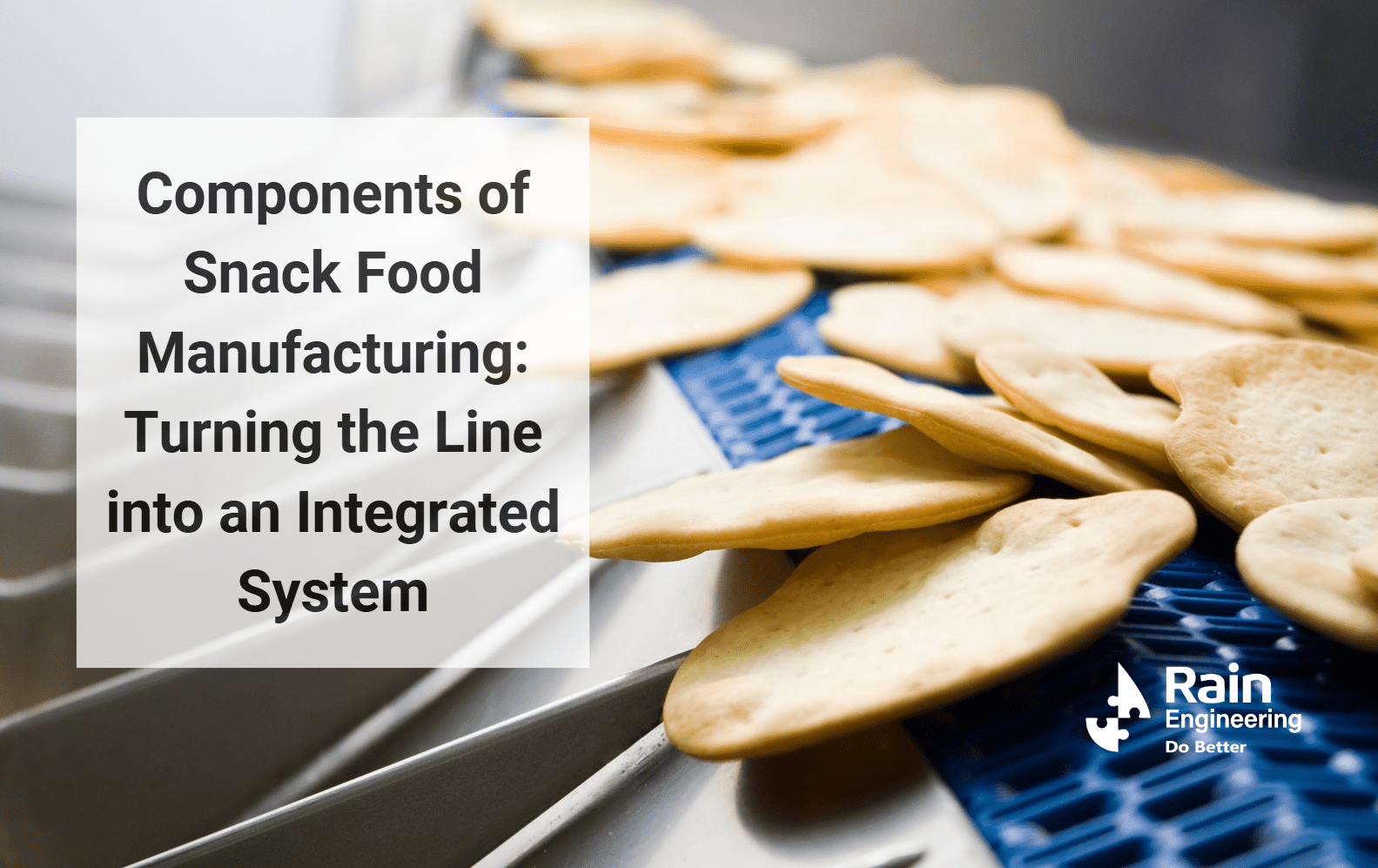
Components of Snack Food Manufacturing: An Integrated System
Walk into a typical snack facility and the physical flow looks straightforward: dry ingredients arrive in bulk, are transformed through cooking, coated with flavors, then bagged and cased at speed.
The hidden reality is that each of those pieces of equipment can either stand alone with its own local settings and paperwork, or be wired into a unified snack food manufacturing system with shared data, recipes, and performance targets. -
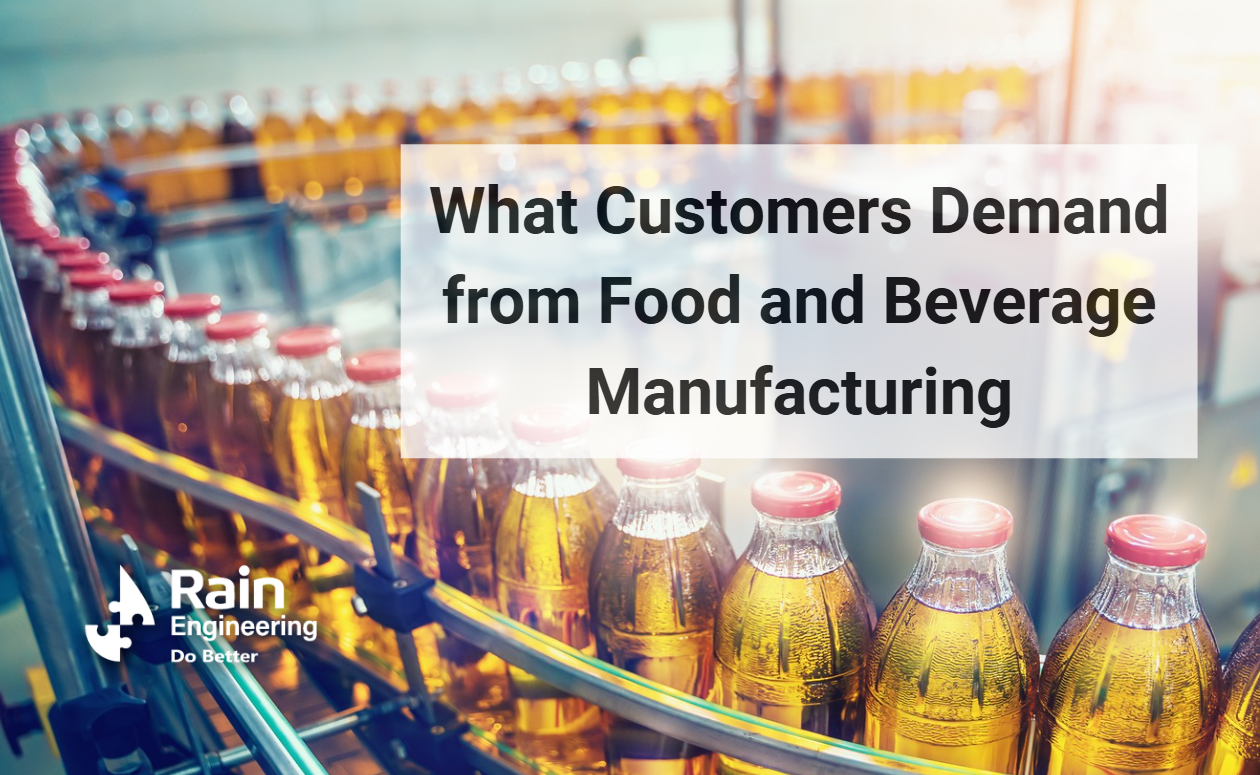
What Customers Demand from Food and Beverage Manufacturing
Customers in food and beverage are no longer satisfied with generic quality claims; they increasingly expect concrete, digital proof of food and beverage traceability at the batch and ingredient level, delivered quickly and on demand.
For manufacturers, that expectation is turning production data, documentation, and MES-powered traceability from “nice to have” into a core competitive requirement.